Why teaching children to save is only the beginning
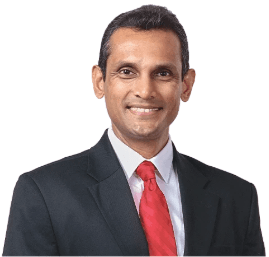
By Asitha Pinnaduwa - Vice President / Head of Products & Propositions, DFCC Bank PLC
Sri Lankan children are introduced to banking remarkably early. An account may be opened soon after birth. Birthday money begins to collect. Parents and grandparents add to it over the years, and the balance becomes a small record of their hopes for the child.
It is a good beginning.
But the child may know almost nothing about the money accumulating in his or her name.
Interest is credited. Does the child know how it was calculated? Prices rise. Does the child understand that the same balance may now buy less? The money remains safely deposited, but has anyone explained why saving, investing and owning capital are not quite the same thing?
The account may belong to the child. The financial decisions around it usually do not.
By the time that child leaves school, those decisions begin arriving quickly. A salary account. A credit card. A lease. A housing loan. Insurance. An investment promising a higher return. A digital offer allowing a purchase now and payment later.
We prepare children to earn money. We encourage them to save it. Somewhere between the two, we assume they will learn how money works.
An account is only the beginning
Sri Lanka has made considerable progress in bringing people into the formal financial system. The Central Bank of Sri Lanka’s Financial Literacy Survey 2021 records bank account ownership at approximately 88 per cent, well above the South Asian average of 68 per cent reported at the time.
The survey remains Sri Lanka’s latest available national baseline on financial literacy. Its findings reveal a more complicated story than the account-ownership figure.
Participants were tested on four basic concepts: numeracy, inflation, compound interest and risk diversification. A person who answered at least three correctly was considered financially literate. On that basis, 57.9 per cent of adults qualified.
Look more closely and the gaps begin to appear.
Most respondents understood compound interest. Only 55.5 per cent understood how inflation affects the real value of money over time. Just 33.3 per cent correctly answered the question on risk diversification.
The Central Bank also measured financial knowledge, attitude and behaviour separately. Knowledge achieved an average score of 5.03, narrowly meeting the benchmark of 5. Financial attitude scored 2.65 against a benchmark of 3. Financial behaviour scored 4.44 against a benchmark of 6. Sri Lanka’s overall score was 12.12 out of 21, below the benchmark of 14.
We appear to know more about money than we consistently put into practice.
That gap is easy to overlook when financial inclusion is measured through accounts opened, cards issued or applications downloaded. Those are valuable measures of access. They cannot tell us whether a person understands the cost of a loan, can compare two financial products or knows when an attractive return carries a risk that is equally large.
Sri Lanka has become rather good at giving people somewhere to keep their money. We have more work to do in helping them decide what that money should do.
Saving is one lesson
A child who saves part of an allowance learns patience. Saving for a bicycle, a book or a school trip introduces the idea that a larger goal may require many smaller choices.
Those are useful lessons. They are not the entire syllabus.
Financial capability includes understanding income, expenditure, cash flow, interest, inflation, credit, investment, taxation, insurance and risk. It involves comparing alternatives and recognising trade-offs. It is knowing that the cheapest option today may cost more over time, and that the product offering the highest return may also carry the greatest possibility of loss.
Debt is a good example.
Children are often taught that debt is bad. In adult life, the answer is less tidy. A loan may pay for an education, a home, equipment or a business capable of producing future income. Another loan may pay for something consumed long before the final instalment is due.
Both are debt. Their consequences can be very different.
Risk is equally difficult to reduce to a simple rule. Avoiding all risk can protect capital, but it can also limit opportunity and allow inflation to diminish the value of idle money. Taking a risk without understanding the possible loss is hardly financial confidence. The useful skill lies in knowing which risk is considered, which is necessary and which is simply reckless.
A savings account can help begin these conversations. It cannot conduct them for us.
What does education teach us about money?
Sri Lanka’s financial-literacy results improve with educational attainment.
According to the Central Bank survey, respondents with no schooling recorded an overall score of 9.54. Those educated up to Ordinary Level scored 12.22, while respondents with Advanced Level qualifications scored 13.46. Graduates and postgraduates recorded the highest score at 14.99.
Education clearly helps. It does not guarantee confidence in every financial decision.
A student may leave school able to calculate percentages without knowing how to compare the total cost of two loans. Another may understand the textbook definition of inflation but fail to recognise that an investment earning less than the inflation rate is losing purchasing power. A young employee may receive a first salary without knowing how much can safely be committed to monthly repayments.
Our conventional measure of literacy asks whether a person can read and write. Financial literacy asks for something more demanding: whether a person can read a financial choice and understand where it may lead.
Sri Lanka has yet to publish a comparable national assessment of financial capability among schoolchildren. We therefore know how many children have accounts more readily than we know how many understand interest, debt or investment.
What is measured tends to receive attention. What is easy to count can easily become a substitute for what we really need to know.
Children are already making financial decisions
Money no longer waits for adulthood.
Children encounter online marketplaces, gaming purchases, subscriptions, digital wallets and social-media promotions well before they receive a regular income. A payment may take only a tap, making the act of spending almost invisible even though the cost remains real.
The OECD’s PISA 2022 financial-literacy assessment, published in 2024, examined 15-year-olds across 20 participating countries and economies. Around 60 per cent of the students assessed already held a bank account, payment card or both. More than 85 per cent had bought something online during the previous year. Yet 18 per cent did not reach the basic level of financial-literacy proficiency.
Sri Lanka did not participate, so these figures should not be read as a measure of Sri Lankan students. They do show how quickly financial exposure can run ahead of financial understanding.
The assessment also found that higher-performing students were more likely to save and compare prices. Socioeconomic background accounted for 12 per cent of the variation in performance across the participating OECD economies.
Financial education cannot be discussed as though every child begins in the same place. One child may learn through an allowance, a savings account and conversations at home. Another may see money discussed only when there is not enough of it.
When a household shock reaches the classroom
Sri Lanka’s recent economic crisis demonstrated how closely household finances and childhood opportunity are connected.
The Department of Census and Statistics’ Household Survey on the Impact of the Economic Crisis 2023 found that 60.5 per cent of households experienced a reduction in income, while 91.1 per cent reported an increase in expenditure. More than half of households, 54.9 per cent, were in debt.
Among indebted households, 22.3 per cent had borrowed to meet daily food requirements. This was the most frequently reported reason for indebtedness in the survey.
The pressure moved beyond household budgets. The education of 54.9 per cent of people aged between three and 21 had been affected by the crisis. Families bought fewer uniforms and stationery items, reduced tuition attendance or moved towards online classes as they tried to manage rising costs.
No financial-literacy programme could have prevented a national economic crisis. Knowledge does not create income where none exists, and a well-planned household cannot save its way out of every structural shock.
It can, however, affect the choices available before and during difficulty. Understanding borrowing costs, building an emergency reserve, recognising an unsuitable financial offer and responding early to unsustainable repayments may preserve options for longer.
A household financial problem can eventually become a child’s educational problem. Years later, reduced educational opportunity may return as lower earning capacity and greater financial vulnerability.
That is how one generation’s financial constraints can enter the life of the next.
Let children see the decisions
A useful financial education does not require a child to become a miniature investor.
It can begin at home with ordinary choices. Give the child a budget for an outing. Compare the cost of buying something immediately with saving for a better version. Show how interest is added to a balance. Explain why prices change. Allow an older child to compare two real savings products and decide which is more suitable.
Schools can do more with the mathematics they already teach. Interest can be explained through an actual deposit or loan. Inflation can be shown through the changing cost of a familiar item. Risk can be explored by comparing what happens when money is concentrated in one place or spread across several.
Banks have their own responsibility. A children’s account provides access and a practical setting in which learning can take place. It should never be mistaken for evidence that the learning has already happened.
At DFCC Bank, we see the DFCC Junior Savings Account as a place from which the conversation can begin. The account allows families to save for a child and recognise important milestones. Its greater value emerges when the child becomes involved: setting a goal, following the balance, seeing interest credited and understanding why the money is being saved.
The recently enhanced DFCC Garusaru Loan proposition creates another opening for that conversation. Eligible pensioners can receive qualifying interest concessions while building savings for a child or grandchild through a linked DFCC Junior Savings Account, subject to the applicable terms and savings commitments.
The financial benefit passes from one generation to another. The knowledge should travel with it.
What should a financially capable school-leaver know?
The Financial Literacy Roadmap of Sri Lanka 2024-2028 gives the country an opportunity to place practical financial capability more firmly within education, family life and financial services.
A financially capable school-leaver need not understand every investment instrument. A reasonable foundation would be the ability to:
prepare and follow a basic budget;
explain how simple and compound interest work;
understand how inflation affects savings and purchasing power;
compare the full cost of different borrowing options;
distinguish debt that may create value from debt used for immediate consumption;
understand the relationship between risk and return;
explain why diversification can reduce risk;
recognise common financial scams and protect personal information;
read the essential terms of a financial product; and
know when to ask for qualified help.
These skills are harder to count than accounts. They are also far more useful once childhood ends.
We should continue opening savings accounts for children. We should continue celebrating the discipline of saving and the generosity of parents and grandparents who plan ahead for them.
Then we should let children into the conversation.
A bank account can hold their money. A financial education can help them decide what to do with it.