DFCC Bank Takes Breast Health Conversations Beyond the Clinic
~ More than 450 women in Ratnapura, Galle and Batticaloa receive breast health education and clinical examinations ~
Sri Lanka’s Ministry of Health has recorded a sustained rise in breast cancer. The crude incidence rate among women increased from 18.4 per 100,000 in 2005 to 48 per 100,000 in 2021. The International Agency for Research on Cancer estimated that 4,555 women in Sri Lanka were diagnosed with breast cancer in 2022, accounting for 26% of all cancers diagnosed among women in the country. These are the latest internationally comparable estimates available, and they are serious enough without attempting to guess what the number may be today.
Yet the demands that fill a woman’s day can make an examination remarkably easy to postpone. Work must get done. Children must be collected. Meals must be ready. A business must open in the morning. An elderly parent may need care. When nothing appears to be seriously wrong, an examination can wait. Another week becomes another month. Another month becomes another year.
Sometimes, it waits until a change can no longer be ignored.
The figures are stark, but everyday life is less accommodating. Life has a way of getting in the way of looking after it. Early detection is pushed to the back of the queue. The examination may be available. Finding the time, information and confidence to seek it may not be.
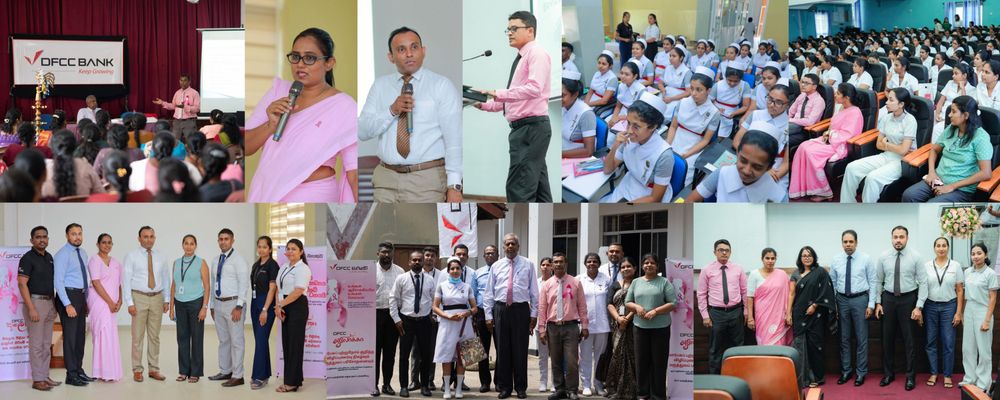
For the second consecutive year, DFCC Bank sought to bring both the information and the examination closer to women. During October and November 2026, the Bank worked with regional health authorities to provide breast health education and clinical breast examinations to more than 450 women in Ratnapura, Galle and Batticaloa.
The programme was conducted under the theme “Every Story Is Unique, Every Journey Matters.” It is an appropriate description. No two women carry exactly the same responsibilities, risks or fears. No two diagnoses take precisely the same course. But every woman should have the opportunity to seek professional advice before uncertainty becomes urgency.
The programme placed education and access to clinical examination in the same room. Awareness campaigns often end after telling people what they should do. Acting on that advice is left for another day, at another place, after another appointment has been made. Here, women could learn, ask questions and undergo an examination through programmes conducted with regional healthcare authorities.
In Ratnapura, DFCC Bank worked with the Office of the Regional Director of Health Services to engage schoolteachers and newly recruited midwives. In Galle, female government officers from the Dakshinapaya Ministry Complex and newly recruited midwives participated through a partnership with the Chief Ministry of the Southern Province and the Office of the Regional Director of Health Services. A third programme was conducted with the Office of the Regional Director of Health Services in Batticaloa.